10 Peaceful Aquarium Fish for Freshwater Community Tanks

Creating a community tank filled with peaceful aquarium fish is one of the most rewarding things you can do as a fishkeeper. The key is choosing species that share the same water needs and temperament. Get that right, and you end up with a peaceful, lively tank full of color and activity. Get it wrong, and you have a war zone.
These 10 freshwater fish are proven community companions. They cover all three water levels, stay peaceful with their tankmates, and are hardy enough for hobbyists of any experience level.
1. Neon Tetra

Few fish are as instantly recognizable as the Neon Tetra. Its electric blue stripe and red tail make it a staple in community tanks worldwide. Keep them in groups of at least 10, and they school tightly through the mid-water column in a stunning display. They prefer slightly acidic water (pH 6.0–7.0) and a stable temperature around 75°F. Avoid keeping them with large, predatory fish that will see them as a snack.
2. Corydoras Catfish

Corydoras are the cleanup crew every community tank needs. These small, armored catfish patrol the substrate and eat leftover food before it decays and pollutes the water. They are completely peaceful and highly social, so keep at least six of the same species together. Use sand or smooth gravel to protect their delicate barbels, and they will thrive for years.
3. Harlequin Rasbora
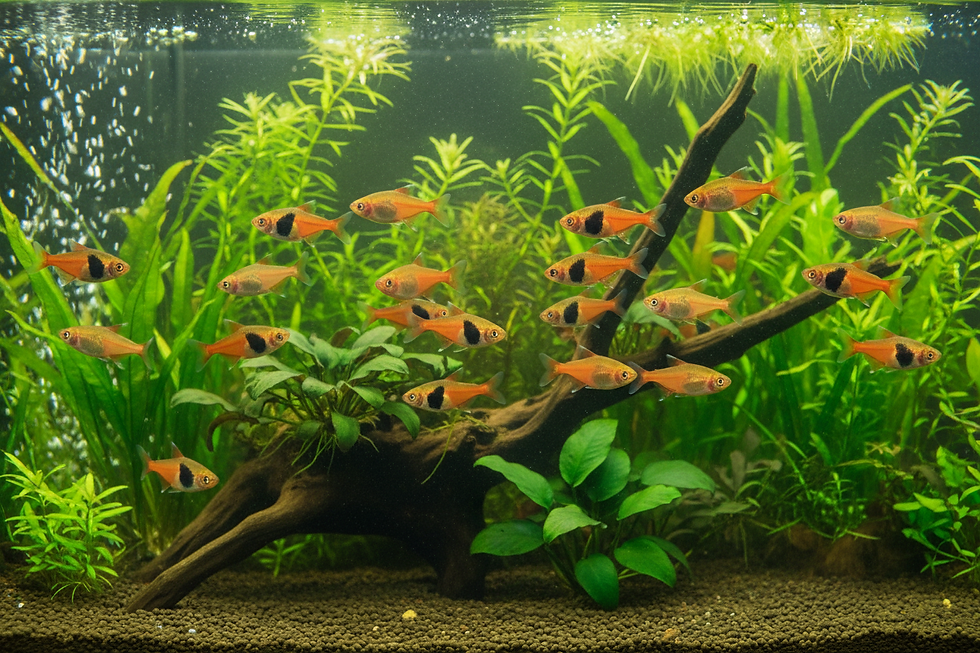
The Harlequin Rasbora is one of the most beginner-friendly schooling fish available. Its salmon-pink body and distinctive black triangular patch make it easy to identify and beautiful to watch. These fish are exceptionally hardy and adapt well to a wide range of water parameters, making them forgiving for newer aquarists. They swim in the middle of the tank and pose zero threat to any tankmate.
4. Guppy

Guppies bring color, energy, and personality to any community tank. Males display long, flowing tails in a rainbow of patterns, while females are larger and more subdued. One important note: guppies breed fast. Maintain a 2:1 female-to-male ratio to prevent males from constantly harassing females. They occupy the upper water column and get along with nearly every peaceful species on this list.
5. Platy

Platies are among the toughest livebearers in the hobby. They tolerate a wide range of water conditions, eat almost anything, and never pick fights. Available in dozens of color varieties, from sunset orange to blue moon, they add visual variety without demanding expert-level care. Like guppies, they breed readily, so plan your male-to-female ratio accordingly.
6. Cherry Barb

Many barb species have a reputation for fin-nipping aggression. Cherry Barbs are the exception. Males turn a deep, rich red when in good health and spawning condition, making them one of the most striking small fish you can keep. They do best in groups of six or more, which also keeps males focused on displaying to each other rather than bothering tankmates. They occupy the mid-level and lower zones of the tank.
7. Honey Gourami

If you want a centerpiece fish that won't terrorize the rest of the tank, the Honey Gourami is your answer. Unlike Dwarf Gouramis (which can be territorial) or larger species, Honey Gouramis are consistently calm. Their golden-yellow coloring intensifies as they mature and settle into a stress-free environment. As labyrinth fish, they breathe air from the surface, so always leave space between the water line and the lid.
8. Zebra Danio
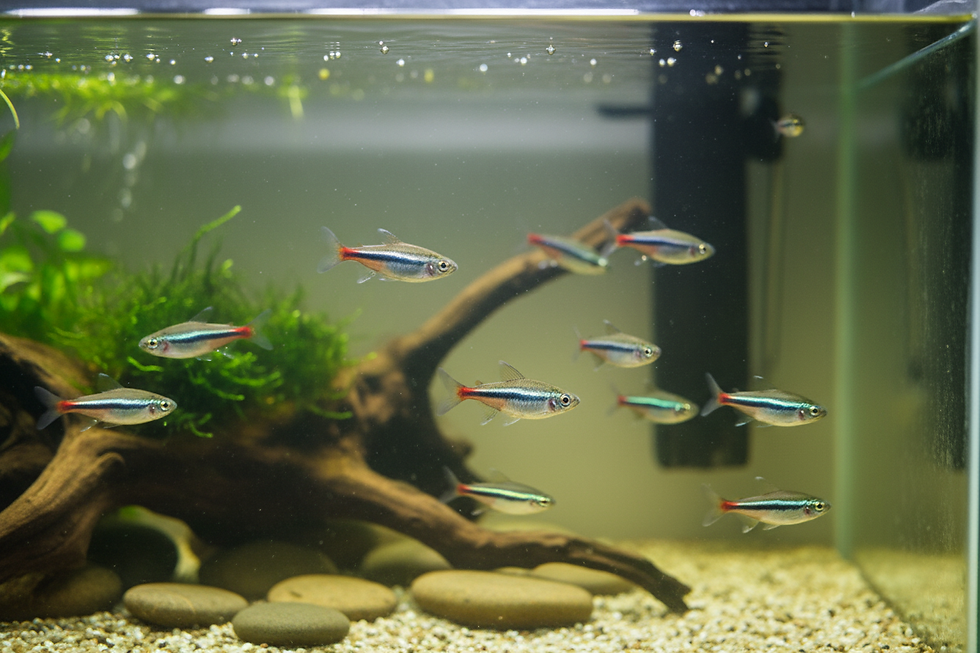
Zebra Danios are practically indestructible. They tolerate a broader temperature range (65–80°F) than most tropical fish and are one of the first species recommended for cycling a new tank. Their horizontal silver and blue stripes catch the light as they dart across the upper water column in tight groups. They are active, curious, and impossible to miss. Pair them with calmer mid-water species so their energy does not stress slower fish.
9. Bristlenose Pleco
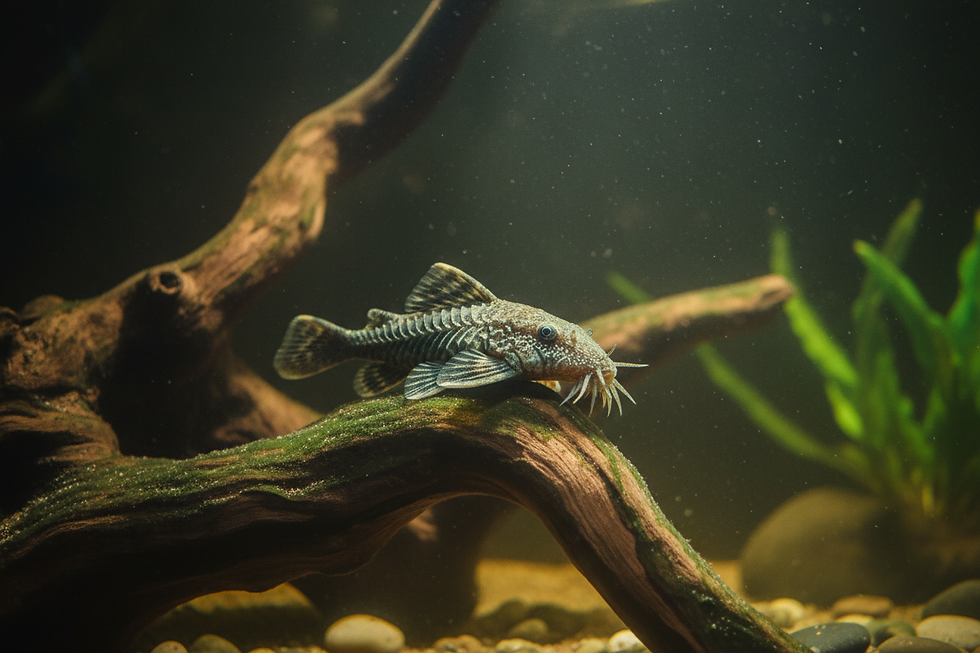
Common Plecos can grow to 18 inches and quickly outgrow most home tanks. Bristlenose Plecos top out at around 5 inches, making them a practical and effective algae eater for tanks of 30 gallons or more. They spend most of their time anchored to driftwood or glass, rasping away at algae and biofilm. Add driftwood to their tank as a dietary supplement and offer sinking algae wafers a few times a week to keep them in top condition.
10. Kuhli Loach

Kuhli Loaches look like tiny eels and behave like shy, nocturnal explorers. During the day they hide in caves, under driftwood, or in dense plants. At night they come out to scavenge along the bottom. They are completely harmless to other fish and add a fascinating, unusual element to a community setup. Keep them in groups of at least three to five, as they are far more active and visible when kept with their own kind.
How to Build Your Community Tank with Peaceful Aquarium Fish
Most of these fish thrive at a temperature between 75°F and 80°F and a pH of 6.5–7.5, which makes finding compatible combinations straightforward. Always quarantine new arrivals for two to four weeks before adding them to an established tank. This one step prevents diseases like Ich from wiping out a tank you have spent months building.
Start with a solid foundation of two or three species, let the tank settle, and add more over time. A community tank built with patience rewards you with a slice of living art that keeps evolving.


Comments