Bird Flu Risks at Outdoor Feeders and Bird Baths How to Protect Yourself and Pets

Millions of people keep bird feeders and bird baths in their backyards. It's a genuinely enjoyable hobby, one that connects you to nature and supports local wildlife. But with headlines about bird flu appearing more frequently, it's fair to ask: should you be worried? Do your feeders put you, your family, or your pets at risk?
The short answer is no, not significantly, but that doesn't mean you should do nothing. A little awareness and a few simple habits go a long way toward keeping everyone safe, including the birds.
Here's what the science actually says, and what you can do about it.
What Is Bird Flu, and Why Is It in the News?
Bird flu, formally known as Highly Pathogenic Avian Influenza (HPAI) H5N1, is a strain of influenza that primarily infects birds. It has been circulating globally for decades, but the version currently spreading, clade 2.3.4.4b, has become unusually widespread since 2022. It has infected wild birds, commercial poultry flocks, dairy cattle, and in rare cases, humans.
As of 2025, the CDC continues to assess the risk to the general public as low. Most human cases reported in the United States have involved people with direct, prolonged occupational exposure to infected poultry or dairy cattle. There are no confirmed cases of person-to-person transmission.
Still, the virus is active in wild bird populations, and that's where your backyard setup enters the picture.
Do Bird Feeders and Bird Baths Actually Increase Your Risk?
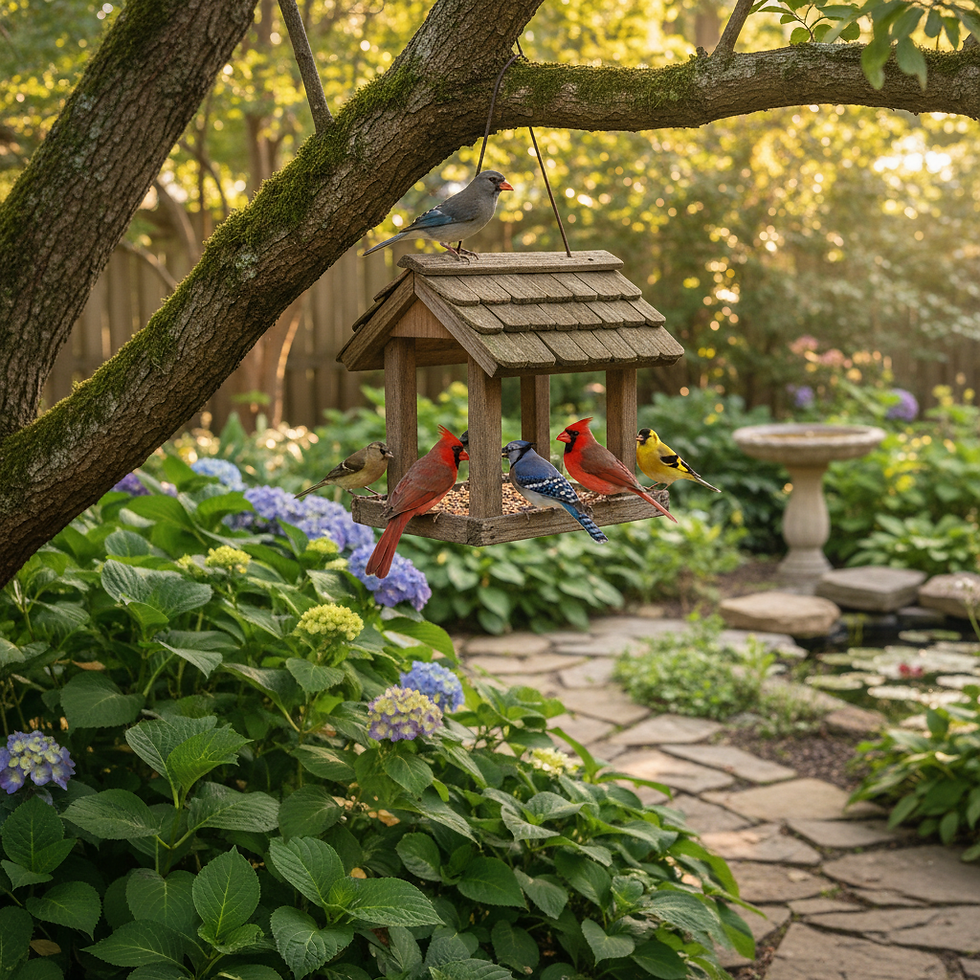
Here's the nuanced truth: your feeder doesn't create risk from nowhere, but it does create a gathering point. When birds congregate in one spot, the chances of disease spreading among them go up. That includes H5N1, but also far more common illnesses like salmonellosis, aspergillosis (a fungal lung infection), and conjunctivitis.
The good news is that the birds most likely to visit your backyard feeders, songbirds like sparrows, finches, chickadees, and cardinals, are not considered natural reservoirs for H5N1. According to the Cornell Lab of Ornithology, only about 3% of confirmed wild bird cases involve songbirds. The virus overwhelmingly affects waterfowl (ducks, geese, swans), shorebirds, and raptors like hawks and eagles.
So if your feeder attracts the typical backyard crowd, your risk from H5N1 specifically is very low. The bigger, more consistent risk is from the everyday bacteria and fungi that accumulate in dirty feeders and standing water. Those can make birds sick, and in rare cases, they can affect people too.
When Should You Take Down Your Feeders?
There is no federal recommendation from the USDA or CDC telling the general public to remove backyard bird feeders. That said, experts agree there are specific situations where temporarily taking them down is the right call.
Consider removing your feeders if:
You keep backyard chickens, ducks, or other domestic poultry. Wild birds at your feeder can carry the virus to your flock, even without showing symptoms themselves.
You live near a commercial poultry or egg farm. The biosecurity stakes are higher in those areas, and attracting wild birds to your property increases risk for the surrounding community.
Your local or state wildlife agency confirms an active H5N1 outbreak in your specific county or region. In that case, removing feeders for two to three weeks encourages birds to disperse rather than congregate.
You notice sick or dying birds around your yard repeatedly. One dead bird may be unrelated. Multiple dead birds in a short period, especially waterfowl or raptors, warrants reporting to your state wildlife agency.
If none of these apply to you, keeping your feeders up is generally fine. Just clean them properly.
How to Clean Your Feeders and Bird Baths (The Right Way)

This is where most backyard birders fall short. A quick rinse under the hose is not enough. Old seed, feces, and moisture create a breeding ground for bacteria, mold, and viruses. Proper cleaning removes all of that.
Follow this routine every one to two weeks for feeders, and every two to three days for bird baths (daily in hot weather):
Step 1: Gear up. Put on disposable gloves and a face mask before you touch anything. Dried droppings can carry pathogens that become airborne when disturbed.
Step 2: Empty everything. Remove all old seed, water, and debris. Discard it in the trash, not in compost.
Step 3: Scrub with hot soapy water. Use a dedicated brush (not one you use in the kitchen) to scrub every surface, including all crevices and corners where seed builds up.
Step 4: Soak in a 10% bleach solution. Mix one part household bleach with nine parts water. Submerge the feeder or sponge-clean the bird bath thoroughly and let it sit for 10 minutes. This solution kills H5N1, salmonella, and most fungal spores.
Step 5: Rinse completely. Rinse until no bleach smell remains. Bleach residue harms birds.
Step 6: Dry fully before refilling. Wet seed molds quickly. Let the feeder air dry completely before adding fresh seed.
Step 7: Wash your hands. Use warm soap and water for at least 20 seconds. Do not touch your face until you have done this.
Also, rake up spilled seed and droppings under your feeder at least twice a week. This debris attracts ground-feeding birds, rodents, and other scavengers, which increases pathogen load in the soil right beneath where you and your pets walk.
Protecting Your Pets

This is where the picture gets more serious, particularly for cat owners.
Cats are highly susceptible to H5N1. Confirmed feline cases have shown high mortality rates, with some reports indicating up to 70% of infected cats dying or requiring euthanasia due to severe neurological decline. Cats typically contract the virus by hunting and consuming infected birds, especially waterfowl, or by coming into contact with heavily contaminated environments.
Dogs are also susceptible, though confirmed cases in dogs remain rare. The risk still warrants taking precautions.
For cats: Keep them indoors. This is the single most effective step you can take. Indoor cats cannot hunt wild birds, and they cannot be exposed to droppings around the feeder. If your cat spends time outside, keep them away from the feeder area entirely and watch closely for any signs of illness.
For dogs: Do not let your dog sniff, mouth, or eat anything around the bird feeder or bird bath, including fallen seed, pooled water, or droppings. Train a reliable "leave it" command if you haven't already. Keep dogs on a leash in areas where waterfowl may congregate.
Watch for these symptoms in both cats and dogs if you suspect exposure:
Coughing, sneezing, or difficulty breathing
Lethargy or sudden loss of appetite
Runny nose or watery, red eyes
Tremors, seizures, loss of coordination, or circling (these are neurological signs and require emergency veterinary care)
If you notice any of these signs and your pet has had potential exposure to wild birds, call your vet immediately and mention the possibility of H5N1. Your vet may contact your state veterinarian for guidance on testing protocols.
What to Do If You Find a Dead or Sick Bird
Finding a single dead bird near your feeder is not an emergency. Birds die for many reasons. But if you find multiple dead birds, particularly waterfowl, raptors, or large numbers of any species, treat it as a potential concern.
Do not touch sick or dead birds with your bare hands. Use a plastic bag turned inside out as a glove, double-bag the bird, and dispose of it in an outdoor trash bin. Wash your hands thoroughly afterward.
Report mass bird deaths to your state wildlife agency or call the USDA Wildlife Services hotline at 1-866-536-7593. You can also report through the USGS Wildlife Health Information Sharing Partnership (WHISPers) database.
Practical Tips to Lower Risk Without Giving Up Your Feeders
Feeder Setup
Choose plastic or glass feeders over wood. Non-porous surfaces are easier to fully disinfect.
Space multiple feeders at least 20 feet apart. This reduces crowding and limits how many birds share the same surface.
Move feeders and baths to a new location every week to prevent pathogen buildup in the soil beneath them.
Use a feeder tray to catch fallen seed and reduce ground contamination.
Day-to-Day Habits
Never touch your face while handling feeders or anything from the feeder area.
Store bird seed in airtight containers to prevent mold and keep rodents out.
Do not offer raw meat scraps or food that could attract larger scavengers.
Change bird bath water every two to three days and scrub the basin each time.
Recommended Products to Stay Safe

The products below can make your routine safer and easier. These are affiliate links, which means we may earn a small commission at no additional cost to you if you purchase through them. We only recommend items that genuinely serve the safety practices described in this post.
Easy - Clean Glass Metal Feeders
Glass and stainless steel feeders are the easiest to fully disinfect because they don't absorb moisture or harbor bacteria in the way wood does. Look for models with wide openings and removable bases so you can reach every corner during cleaning. Search for "glass tube bird feeder with removable base" on Amazon for a wide range of options at different price points.
Disposable Nitrile Gloves
Standard kitchen gloves are reusable but difficult to fully decontaminate. Disposable nitrile gloves are a better choice for feeder cleaning. They're puncture-resistant, latex-free, and can be tossed immediately after use. A box of 100 typically costs under $15 and lasts months. Search "disposable nitrile gloves 100 pack" on Amazon.
Dedicated Feeder Cleaning Brush Set
Never use the same brushes you use for dishes. A dedicated feeder brush set with long handles and narrow tube brushes lets you reach every corner of your feeders without cross-contaminating your kitchen. Look for "bird feeder cleaning brush set" on Amazon for multi-piece kits designed specifically for this purpose.
Clorox Regular Bleach (Multi-Pack)
Plain, unscented household bleach is the gold standard for killing H5N1 and other avian pathogens. Avoid scented or "splash-less" versions since those formulas are often less effective as disinfectants. Search "Clorox regular bleach" on Amazon to find bulk value packs.
Pedestal Bird Bath with Drain Plug
Bird baths with a drain plug at the bottom make emptying and cleaning dramatically faster. Instead of tipping and splashing, you just pull the plug, let it drain, scrub, and refill. Look for "bird bath with drain plug" on Amazon. Resin or concrete options are both durable and weather-resistant.
N95 Masks
When raking up droppings and debris under your feeder, a basic face covering is worth wearing. N95 masks filter out airborne particles including dried fecal matter and fungal spores. A 10-pack runs about $15 to $20 on Amazon. Search "N95 respirator mask 10 pack".
Audubon Society Field Guide to Birds
Knowing which species are visiting your feeder matters. If you can identify the difference between a house finch and a duck or a hawk, you'll have a better sense of your actual risk level on any given day. The Audubon Society Field Guides are organized by region and are available for under $20. Search "Audubon Society Field Guide Birds" on Amazon and select your region.
The Bottom Line
Keeping bird feeders and bird baths is a low-risk activity for most people. The birds you're most likely to attract, songbirds like sparrows and finches, are not the species driving the current H5N1 outbreak. The real risk, both for H5N1 and for everyday avian diseases, comes from poor hygiene habits: dirty feeders, standing water, and accumulated droppings.
Clean your feeders regularly. Wear gloves. Keep your cat indoors and your dog away from the feeder area. Know when it makes sense to temporarily take the feeder down. Those four habits cover the vast majority of your risk.
You don't have to stop enjoying your backyard wildlife. You just have to be a little more intentional about it.
This post is intended for general informational purposes only and does not constitute medical or veterinary advice. If you or a pet show symptoms consistent with influenza after exposure to wild birds, consult a licensed healthcare provider or veterinarian. For current outbreak information, visit the CDC and USDA APHIS websites directly.


Comments