Indoor or Outdoor Rabbit Free Roaming What Owners Need to Know


You got a rabbit. Now the big question: where does it actually live? A hutch in the yard? The run of the living room? A dedicated rabbit room? The choice you make directly affects your rabbit's lifespan, safety, and wellbeing. Indoor rabbits typically live 8 to 12 years. Outdoor rabbits average just 3 to 5. That gap is not a coincidence.
This guide breaks down every option so you can make a smart, informed decision for your specific situation.
The Case for Keeping Rabbits Indoors
Keeping a rabbit indoors is widely recommended by rabbit welfare organizations, including the House Rabbit Society and the Rabbit Welfare Association and Fund. The reasons are straightforward.
Indoor rabbits live in a climate-controlled environment. They are not exposed to extreme heat, freezing temperatures, or sudden weather changes. Rabbits are extremely sensitive to heat: temperatures above 80°F (27°C) cause heat stress, and anything above 85°F (29°C) can be life-threatening. They cannot sweat, so they rely entirely on their ears and environment to cool down.
Living indoors also means daily interaction with you. Rabbits are highly social animals. Regular contact strengthens the bond between owner and pet, helps you spot early signs of illness (changes in eating, droppings, or energy levels), and reduces stress for the rabbit. A quiet, isolated hutch in the backyard offers none of that.
Indoor Free Roaming: What It Means and What It Requires
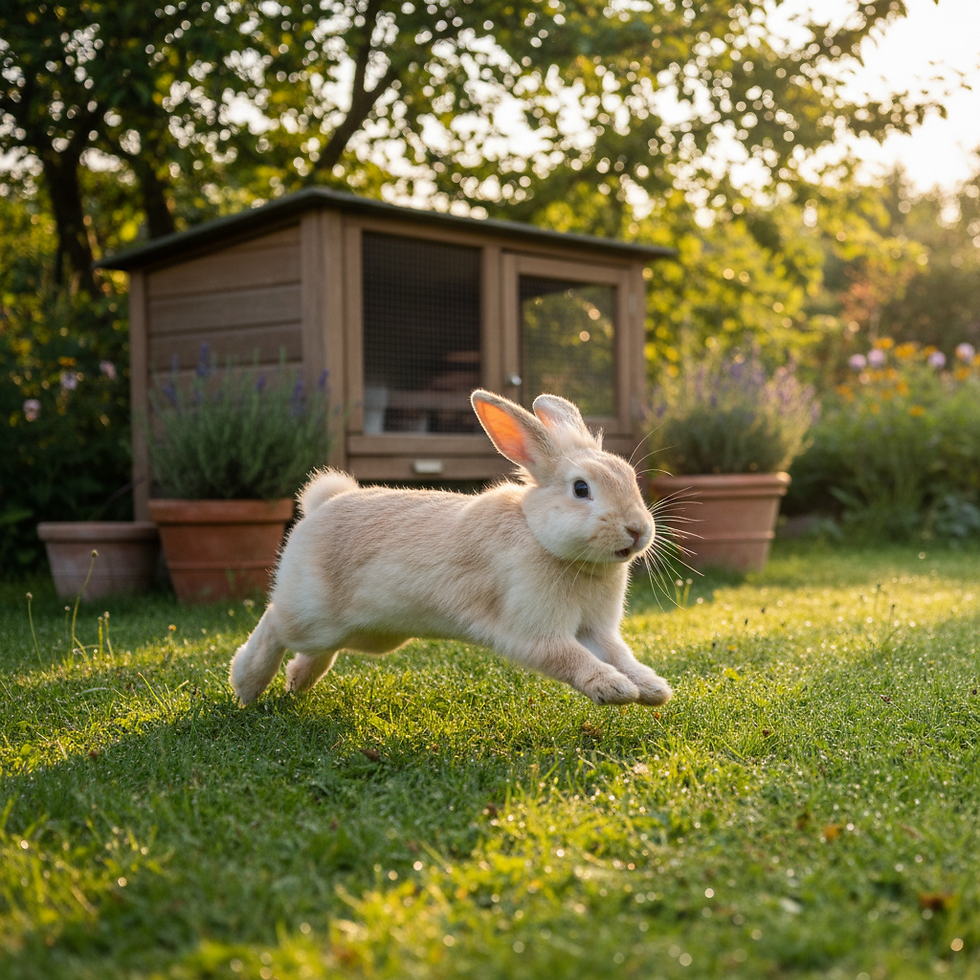
Free roaming means your rabbit has access to open space rather than being confined to a cage or pen around the clock. This is the gold standard for rabbit welfare. A rabbit that can run, binky (that joyful mid-air twist), and explore freely is a much happier rabbit.
But free roaming indoors is not simply opening a door and letting your rabbit wander. Your home needs preparation first.
Rabbit-Proofing Your Home
Rabbits chew. It is not misbehavior. It is instinct. In the wild, they chew roots and branches to keep their continuously growing teeth worn down. In your home, that instinct targets electrical cords, furniture legs, baseboards, and carpet edges.
Encase all electrical cords in split loom tubing or solid PVC conduit. A rabbit that chews through a live wire can be electrocuted instantly.
Use plastic corner guards or cable covers on baseboards and furniture legs.
Block access to the undersides of sofas and beds where rabbits love to hide and chew unseen.
Remove all toxic plants. Common household plants including lilies, ivy, aloe vera, and philodendron are poisonous to rabbits. Check the full toxic plant list at the House Rabbit Society.
Add rugs, yoga mats, or sea grass mats on hardwood or tile floors. Rabbits have no paw pads and can slip badly on smooth surfaces, risking spinal injuries.
Avoid scented candles, essential oil diffusers, and chemical sprays near your rabbit's roaming area. Their respiratory systems are highly sensitive. Plain white vinegar diluted in water is a safe cleaning option.
Setting Up a Home Base
Even free-roaming rabbits benefit from a defined home base: an open exercise pen or sectioned area that holds their litter box, hay supply, water, and a hideaway. This space stays open at all times but gives the rabbit a secure retreat. Start by rabbit-proofing a single room, observe your rabbit's habits, and expand their territory gradually once you understand where and what they chew.
The Rabbit Welfare Association and Fund recommends a minimum continuous living space of 3m x 2m x 1m for a pair of rabbits. If you are housing one rabbit, that is still the benchmark to aim for, not a ceiling.
Other Pets in the House
Dogs and cats can coexist with rabbits, but never assume it is safe. Prey drive can activate in a calm, well-behaved dog instantly during fast movement or play. Even a friendly sniff from a cat can terrify a rabbit badly enough to cause a fatal stress response.
Introduce other pets gradually and through a barrier first. Never leave them unsupervised together, regardless of how many successful calm interactions they have had. This is not a rule to test.
Keeping Rabbits Outdoors: Risks Owners Must Understand
Keeping a rabbit in an outdoor hutch is still common, but it carries real risks that every owner should weigh carefully before choosing this setup.
Predators
The threat is not only physical attack. A fox circling a hutch at night, or a cat sitting on top of it, can cause a rabbit to die from shock-induced heart failure without a single wound on its body. Predator stress is a serious and documented cause of death in outdoor rabbits.
If you do keep a rabbit outdoors, standard chicken wire is not sufficient. Use 16-gauge galvanized hardware cloth with no more than a 0.5-inch mesh. Raccoons can manipulate simple hook-and-eye latches. Use bolt latches. Bury a wire skirt at least 8 inches deep around the enclosure to stop digging from both inside and outside. For a full checklist, the House Rabbit Society's outdoor hazards guide is an excellent starting point.
Weather
Heat is the bigger danger. Move rabbits indoors during any day above 85°F (29°C). Cold is more tolerable for rabbits, but temperatures below 40°F (4°C) still require heavy insulation with thick straw bedding. Damp or drafty hutches trigger respiratory infections quickly.
Flystrike is another outdoor-specific risk. In warm months, dirty or damp bedding attracts flies that lay eggs on the rabbit, and the resulting infestation is rapidly fatal if not caught within hours. Daily hutch checks are not optional.
Outdoor Free Roaming: Proceed With Extreme Caution
Letting a rabbit freely roam a garden or yard is the highest-risk option. True outdoor free roaming is generally discouraged unless your garden is fully enclosed, predator-proofed on all sides and overhead, and supervised at all times. Rabbits can dig under fencing in minutes. Hawks and owls are aerial threats that fencing alone does not address.
A supervised outdoor play session in a secure exercise run during mild weather is a healthier compromise than unsupervised outdoor access.
Comparing Your Options Side by Side
Factor | Indoor Free Roam | Outdoor Hutch | Outdoor Free Roam |
|---|---|---|---|
Average lifespan | 8–12 years | 3–6 years | Lowest |
Predator risk | Low (managed) | High | Very high |
Weather exposure | None | Significant | Full exposure |
Social interaction | Daily | Limited | Variable |
Setup effort | Moderate (proofing required) | Moderate | High (full enclosure needed) |
Health monitoring | Easy | Harder | Hardest |
Key Things Every Owner Needs to Think About
Before settling on any arrangement, work through these questions honestly:
How much time can you give? Free-roaming rabbits thrive on interaction. If your rabbit will be alone most of the day, consider getting a bonded pair for companionship.
What is your climate like? If summer temperatures regularly exceed 80°F or winters drop below freezing, outdoor living becomes risky without significant infrastructure.
Do you have other pets? Dogs and cats require careful, ongoing management if they share a space with a rabbit.
Are you prepared to rabbit-proof? Damaged cables, chewed furniture, and worn carpet edges are realities of free roaming. If that is a dealbreaker, a large exercise pen setup may be a better fit.
Do you have a rabbit-savvy vet nearby? Not all vets have expertise in rabbit care.
Resources Worth Bookmarking
Good rabbit care is ongoing learning. These are the most reliable sources to keep close:
House Rabbit Society — the leading global authority on house rabbit care, with guides on health, behavior, diet, and emergency protocols.
Rabbit Welfare Association and Fund — evidence-based housing standards and a rabbit-friendly vet directory, primarily UK-focused but universally relevant.
Merck Veterinary Manual — peer-reviewed medical information on rabbit health, nutrition, and disease.
Oxbow Animal Health — vet-authored guides on rabbit diet and enrichment.
RSPCA Rabbit Care — practical welfare guidance from one of the world's most respected animal welfare organizations.
Recommended Products for Getting Started
These are the core items worth having before your rabbit comes home. Each one addresses a real safety or welfare need covered in this guide.
Cord Protection
Exposed electrical cables are the single biggest hazard for a free-roaming rabbit. Split loom tubing runs along cords and creates a physical barrier that is much harder to bite through than standard cable insulation. Cover every accessible cord before you let your rabbit explore.
Alex Tech Cord Protector Sleeve — flexible split loom tubing that installs without unplugging anything. Available in 10ft and 25ft lengths. Works on charging cables, TV cables, and lamp cords.
Exercise Pen (Home Base Setup)
An exercise pen gives your rabbit a defined home base with enough space to move, stretch, and binky. Use it as a starting zone while you rabbit-proof the rest of the room, then gradually expand your rabbit's access as you learn their habits.
MidWest Homes for Pets Exercise Pen — rust-resistant, foldable iron panels with a walk-through door. The 30-inch height suits most rabbit breeds. Configurable into different shapes to fit your space.
Litter Box and Hay Feeder Combo
Rabbits eat hay constantly, and they tend to eat while using the litter box. A combo unit keeps both in the same spot, reduces mess, and reinforces good litter habits naturally.
BESNEW 3-in-1 Rabbit Hay Feeder and Litter Box — wooden hay manger with two stainless steel bowls and a removable plastic litter pan with a mesh grate. High-sided walls help contain urine spray.
Floor Mats for Traction
Rabbits have no paw pads and can slip badly on hardwood or tile floors, which puts serious stress on their spines and hind legs. Lay mats across their roaming area before they start exploring.
Natural Seagrass Woven Rug — a durable, chew-safe surface that provides traction and doubles as enrichment. Unlike synthetic rugs, seagrass is non-toxic if nibbled.
Hideaway / Shelter
Every rabbit needs a place to retreat and feel safe. A solid hideaway inside their home base reduces stress and gives them control over their environment, which matters more than most owners realize.
Niteangel Wooden Rabbit Hideaway — natural birchwood construction with ventilation slots. The flat top doubles as a raised platform, adding vertical enrichment without taking up extra floor space.
This section contains affiliate links. If you purchase through these links, this site may earn a small commission at no extra cost to you. All products are recommended based on rabbit welfare, not sponsorship.
The Bottom Line
There is no arrangement that is zero-effort. Every setup, indoor or outdoor, requires thought, preparation, and consistent attention. But the data is clear: indoor free roaming gives rabbits the longest, healthiest, most socially rich lives. If your home and lifestyle can support it with proper rabbit-proofing and daily interaction, that is the direction worth moving toward.
Start with one room. Secure the cords, remove the hazards, set up a home base, and watch what your rabbit does with the space. You will learn quickly. So will they.
Common Questions
Can rabbits really die from fright without any physical injury?
Yes. Rabbits have a strong stress response that can trigger fatal cardiac arrest. A predator, a loud sudden noise, or even an aggressive lunge from another animal can cause enough physiological shock to kill a rabbit with no visible wounds. This is documented in veterinary literature and is one of the main reasons why outdoor hutches are considered risky even when physically secure.
How long should a rabbit be out of its pen each day?
The minimum recommendation from most rabbit welfare organizations is at least 3 hours of free movement per day, but more is always better. Rabbits are crepuscular, meaning they are most active at dawn and dusk, so those are the best windows for exercise and interaction. If your rabbit is in a pen for long stretches, enrichment items like tunnels, cardboard boxes, and willow balls help offset the restriction.
My rabbit keeps returning to the same spot to chew. What should I do?
This is normal territorial behavior combined with instinctive teeth maintenance. The most effective approach is redirection, not punishment. Place a wooden chew toy, willow stick bundle, or cardboard box directly at the problem spot. Simultaneously block the surface with a cable cover, corner guard, or furniture leg protector. Rabbits are creatures of habit, so the goal is to replace the habit, not eliminate the urge.
Is it safe to let a rabbit and a cat share the same room?
Only with ongoing supervision and after a slow, careful introduction process. Some cats and rabbits develop tolerant or even friendly relationships over time. Others never do. What matters most is your cat's prey drive and your rabbit's stress response. Even a cat that shows no aggression can panic a rabbit by staring, stalking, or moving too fast. Never leave them alone together, no matter how many calm interactions they have had.
Do rabbits need a companion rabbit?
Rabbits are social animals and generally benefit from having a bonded companion. A single rabbit that receives several hours of daily human interaction can live a full and content life, but a bonded pair tends to be calmer, less destructive, and more resilient when their owner is away. If you get two rabbits, they must be properly bonded through a gradual introduction process. Do not simply place two unfamiliar rabbits together, as territorial fighting can cause serious injuries.
What are the early signs that a rabbit might be unwell?
Rabbits hide illness well, so changes in routine are often the first signal. Watch for reduced hay or water intake, fewer or smaller droppings, a drop in movement or energy, grinding teeth, hunched posture, or a wet chin. Any of these lasting more than 12 to 24 hours warrants a vet call. GI stasis, a condition where the digestive system slows or stops, is a common and serious emergency that can develop quickly and requires prompt treatment.


Comments