Guinea Pig Behavior Secrets How They Communicate Happiness and Surprising Facts Most Owners Miss

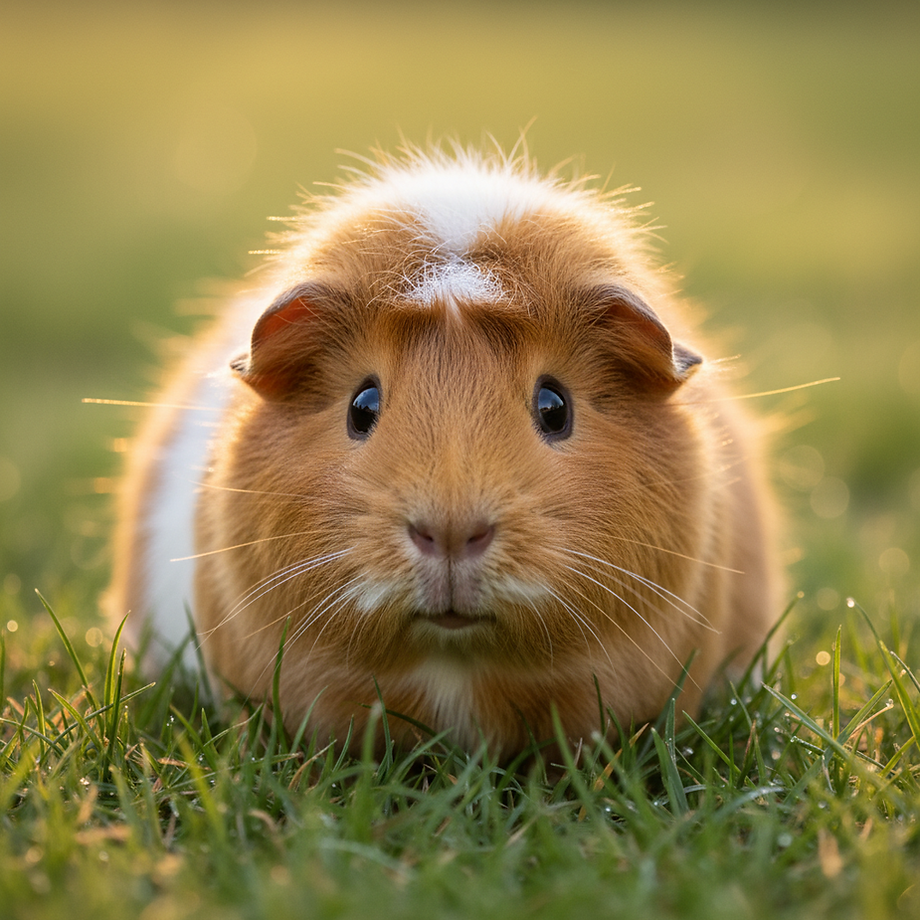
Your guinea pig isn't just sitting there looking cute. It is talking to you constantly. The problem is most owners have no idea what their pet is actually saying, and some of what they assume is dead wrong. Guinea pigs are surprisingly expressive animals with a full vocabulary of sounds, movements, and postures. Once you learn to read them, the relationship you have with your pet changes completely.
This guide breaks down exactly what your guinea pig is communicating, how to know when they are genuinely happy, and a handful of facts that routinely surprise even long-time owners.
The Sound System: What Every Vocalization Actually Means
Guinea pigs are one of the most vocal small pets you can own. They produce at least a dozen distinct sounds, each carrying a different meaning. Here are the most important ones to recognize.
Wheeking
That loud, high-pitched whistle your guinea pig fires off the moment you open the fridge or rustle a bag? That is a wheek, and it means excitement is off the charts. It is essentially a demand call directed at humans. Wild guinea pigs do not make this sound with each other. It evolved specifically for communicating with their owners, which makes it one of the most remarkable things about keeping them as pets.
Purring (Low Pitch)
A deep, rolling purr paired with a relaxed, still body means your guinea pig is content. You will often hear it during a gentle petting session or when they are tucked in next to a bonded companion. This is a good sign.
Purring (High Pitch)
A shorter, sharper purr that rises in pitch at the end means something very different: annoyance or mild discomfort. If your guinea pig makes this sound when you pick them up, they are politely asking you to stop. Pay attention to it. Ignoring the signal too often erodes trust.
Chutting
A soft, repetitive clucking sound made while exploring. It signals that your guinea pig is relaxed, confident, and happy going about their day. Think of it as a sign they feel completely at home.
Teeth Chattering
This one is a red flag. A rapid, clacking sound made by grinding the teeth together is a direct warning: back off. It signals real aggression or serious stress. If two guinea pigs are doing this at each other, separate them before a fight breaks out.
The Mystery Chirp
Occasionally, a guinea pig will produce a sound that is almost identical to a bird chirping. It is rare, it can go on for several minutes, and scientists genuinely do not know what it means. The guinea pig often appears to be in a trance-like state while doing it. It has been observed in bereaved animals, but also in completely healthy, unstressed ones. It remains one of the most puzzling behaviors in guinea pig research.
Body Language: Reading What You Can See
Vocalizations are only half the story. Guinea pigs communicate just as much through what their bodies are doing.
Popcorning
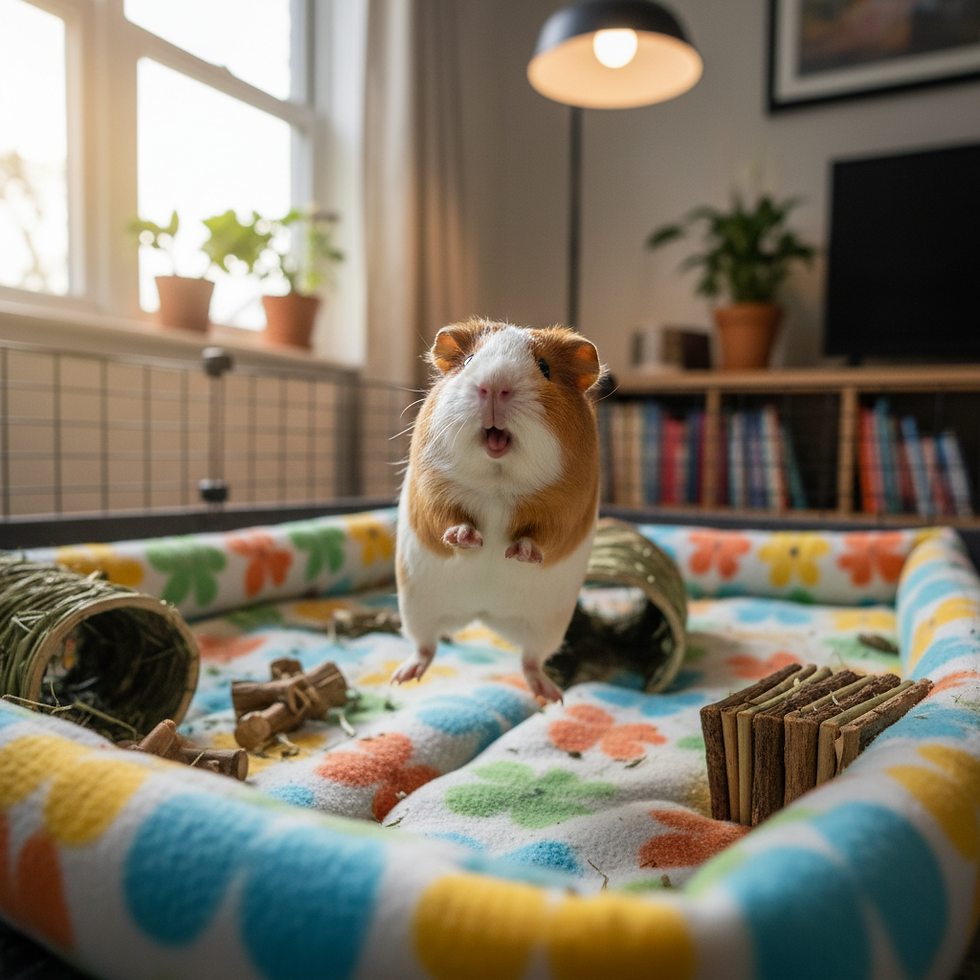
If your guinea pig suddenly launches itself into the air, twists, and lands, then does it again, you are witnessing popcorning. It is named for the random, unpredictable way popcorn pops in a pan. This is pure, unfiltered joy. It happens most often in younger guinea pigs and tends to become less frequent with age, but it never fully stops in a happy, healthy adult. If your guinea pig popcorns regularly, that is one of the clearest signals you can get that they feel safe and thriving.
Zoomies
High-speed laps around their enclosure, often paired with popcorning, mean your guinea pig has energy to burn and feels completely secure doing it. A guinea pig that zooms is a guinea pig that trusts its environment.
Pancaking
The opposite of zoomies. Your guinea pig lies completely flat, legs stretched out to the sides, eyes half-closed. This posture of total relaxation shows they feel safe enough to be physically vulnerable. In the wild, a flat, exposed animal is an easy target. A guinea pig that pancakes in front of you is giving you a genuine compliment.
Rumblestrutting
A low, vibrating rumble combined with a slow, swaggering hip-sway walk. This is a dominance display and can also be a courtship behavior. It is perfectly normal, but if it escalates between two guinea pigs into teeth chattering and chasing, intervene before it becomes a real fight. Every group of guinea pigs has a "boss pig" and this is how they work that out.
Head Tossing
A sharp upward flick of the nose and head. This is a firm "no thank you." Your guinea pig is telling you to stop petting them in that spot, or to stop handling them altogether. It is not aggressive, but it is clear.
Nose Touching and Licking
When a guinea pig nudges your hand with their nose or licks your skin, they are showing affection and checking you out. It is a bonding behavior they normally share with cage companions. If they do it to you, you have earned a level of trust that took real time to build.
How to Know If Your Guinea Pig Is Truly Happy
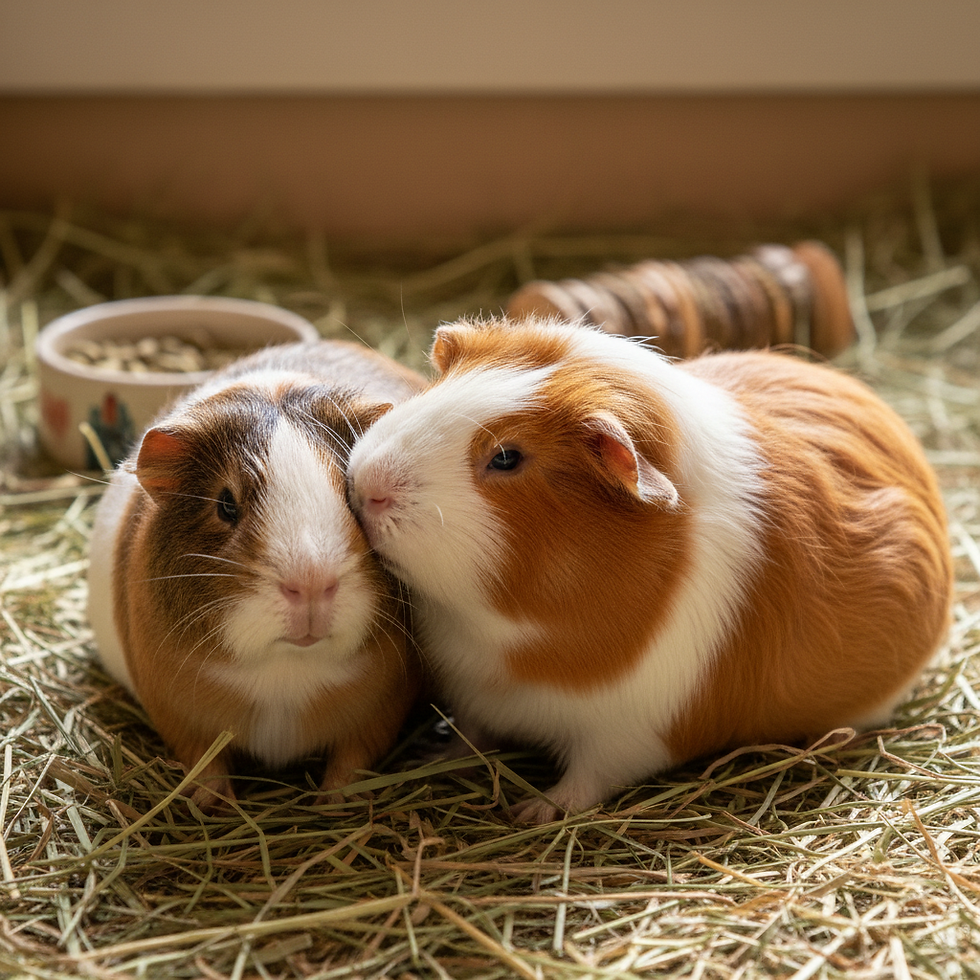
Happiness in guinea pigs is not just the absence of distress. There are active, positive signs to look for.
They wheek loudly when they hear you approaching
They popcorn during floor time or when given fresh hay
They approach the cage bars when you come near rather than hiding
They eat consistently and with enthusiasm
They pancake comfortably in the open, not just tucked in a hide
They groom themselves regularly (a self-grooming guinea pig is a relaxed one)
They make chutting sounds while exploring their space
They interact positively with their cage companions
A guinea pig that hides most of the day, stops eating, becomes unusually quiet, or loses weight needs attention right away. These are early warning signs that something is wrong, either medically or with their environment. Guinea pigs are prey animals by instinct and they mask illness and pain remarkably well. By the time symptoms become obvious, the problem is often serious. Regular observation of their normal behavior is genuinely important.
Facts That Surprise Even Experienced Owners
Guinea pigs have been kept as pets for centuries, yet there is a surprisingly long list of things most owners get wrong or simply never knew.
They cannot make Vitamin C themselves
Like humans, guinea pigs lack the enzyme needed to produce Vitamin C internally. This is not a minor detail. Without regular dietary Vitamin C from fresh vegetables like bell peppers, leafy greens, and parsley, they develop scurvy. Symptoms include lethargy, swollen joints, and dental problems. Vitamin C drops in water sound like a fix, but they degrade quickly once mixed. Fresh vegetables are the most reliable source.
They sleep with their eyes open
Most owners assume their guinea pig is always awake because they rarely see them with closed eyes. In reality, guinea pigs sleep for short bursts throughout the day and night, totaling only a few hours. As prey animals, they evolved to remain visually alert even while resting. You may notice their breathing slow and their body relax, but their eyes stay open. They do occasionally close their eyes fully, and when they do in your presence, it is a significant sign of deep trust.
They have an asymmetric number of toes
Guinea pigs have 4 toes on each front foot and only 3 on each back foot, for a total of 14 toes. Most people who have owned guinea pigs for years have never counted.
Rabbits are not safe companions for them
This is one of the most common and genuinely dangerous misconceptions. Rabbits can carry a bacterium called Bordetella bronchiseptica that is harmless to them but can cause fatal respiratory disease in guinea pigs. Beyond the disease risk, rabbits are stronger animals that can seriously injure guinea pigs through kicking, even unintentionally. They also have different dietary needs. Guinea pigs need other guinea pigs as companions, not rabbits.
Baby guinea pigs are born ready for the world
Unlike most small rodents, guinea pig pups are born fully furred, with their eyes open, and able to eat solid food within hours of birth. Within days they are running, exploring, and behaving like miniature adults. This is called being precocial and it is rare among rodents. A newborn hamster, by contrast, is blind, hairless, and completely helpless for weeks.
Their teeth never stop growing
Guinea pigs have 20 teeth, all of which grow continuously throughout their lives. Constant chewing on hay is what keeps them worn to the right length. A guinea pig that does not eat enough hay risks overgrown teeth that can cause pain, inability to eat, and serious dental disease. Timothy hay should make up roughly 80% of their daily diet. Not as a supplement. As the main event.
They are not from Guinea and are not related to pigs
The name is genuinely misleading on both counts. Guinea pigs originated in the Andes Mountains of South America, where they were domesticated by indigenous communities for food and in some cultures, ritual use. They are rodents, members of the Caviidae family, and more closely related to chinchillas than to any pig. How "guinea" entered the name is still debated. One theory links it to a historical trade route; another suggests it came from a mispronunciation of "Guiana," a region of South America.
They are not a beginner pet for children
Guinea pigs are regularly marketed as easy starter pets, but the reality is different. They need a minimum of 10.5 square feet of living space for a pair. They live 5 to 8 years. They require fresh vegetables daily, regular cage cleaning, and veterinary care from an exotic animal specialist, which costs more than a standard vet visit. They do not enjoy being held the way many children expect. They are rewarding pets, but they require genuine commitment.
Building a Stronger Bond With Your Guinea Pig
Trust with a guinea pig is earned slowly and lost quickly. Here is what actually works.
Start by sitting on the floor near their enclosure and letting them approach you. Do not reach in and grab them. Offer food from your hand before you ever try to hold them. Let them sniff you, run over you, and retreat on their own terms. Once they consistently approach your hand voluntarily, you can begin short, calm handling sessions.
Always support their full body weight when holding them. Guinea pigs do not feel safe dangling. A secure, two-handed hold with their feet supported will calm most guinea pigs down significantly. Keep sessions short at first, 5 to 10 minutes, and increase as your guinea pig becomes comfortable.
Talking to them in a calm, consistent voice also genuinely helps. Guinea pigs recognize the voices of people they trust. Over time, your voice alone can be reassuring to them even from across the room. The wheek they give when they hear you open the kitchen drawer is proof of that.
Recommended Products to Keep Your Guinea Pig Happy

Everything below is chosen based on what genuinely supports guinea pig health and wellbeing. These are affiliate links, which means we may earn a small commission at no extra cost to you if you make a purchase.
Enclosure
MidWest Guinea Habitat Plus
At 47" x 24", this is the most recommended cage for a pair of guinea pigs. It offers enough floor space, excellent ventilation, and an easy-access top panel that makes daily care simple. The included canvas bottom is machine washable.
Living World Deluxe Habitat (Extra Large)
A great alternative that combines a solid base with a wire upper section for airflow. Durable, easy to clean, and large enough for two guinea pigs to live comfortably. Popular with owners who want something sturdier than an all-wire cage.
Bedding
Carefresh Natural Paper Bedding
Soft, highly absorbent, and excellent at controlling odor. Made from reclaimed paper fiber with no inks or dyes. Safe for guinea pig respiratory systems, which are sensitive to aromatic wood shavings like pine and cedar.
GuineaDad Fleece Liner
A washable, reusable fleece liner that wicks moisture away from the surface, keeping your guinea pig dry and comfortable. Eco-friendly, cost-effective over time, and far more sustainable than disposable bedding. Available in multiple sizes to fit standard cages.
Enrichment and Hides
Oxbow Timothy Club Tunnel
Made entirely from hand-woven Timothy hay. Serves as both a hiding spot and a chew toy, supporting dental health while giving your guinea pig a safe, enclosed space to retreat. Completely safe if (and when) they eat it.
Small Pet Select Apple Wood Sticks
Natural apple wood sticks that encourage chewing and help wear down continuously growing teeth. Free from pesticides and chemical treatments. A simple addition that makes a real difference in dental health over time.
The Bottom Line
Guinea pigs are not simple pets. They are communicative, socially complex animals with specific needs that are easy to misread if you do not know what to look for. The wheek when you walk in. The popcorn during floor time. The pancake stretch in the open. These are not random behaviors. They are your guinea pig telling you something specific.
Learn the language, meet their actual needs, and what you get in return is a genuinely affectionate animal that recognizes your voice, runs to greet you, and trusts you enough to fall asleep with you nearby. For a creature that weighs less than a kilogram, that is not a small thing.


Comments